
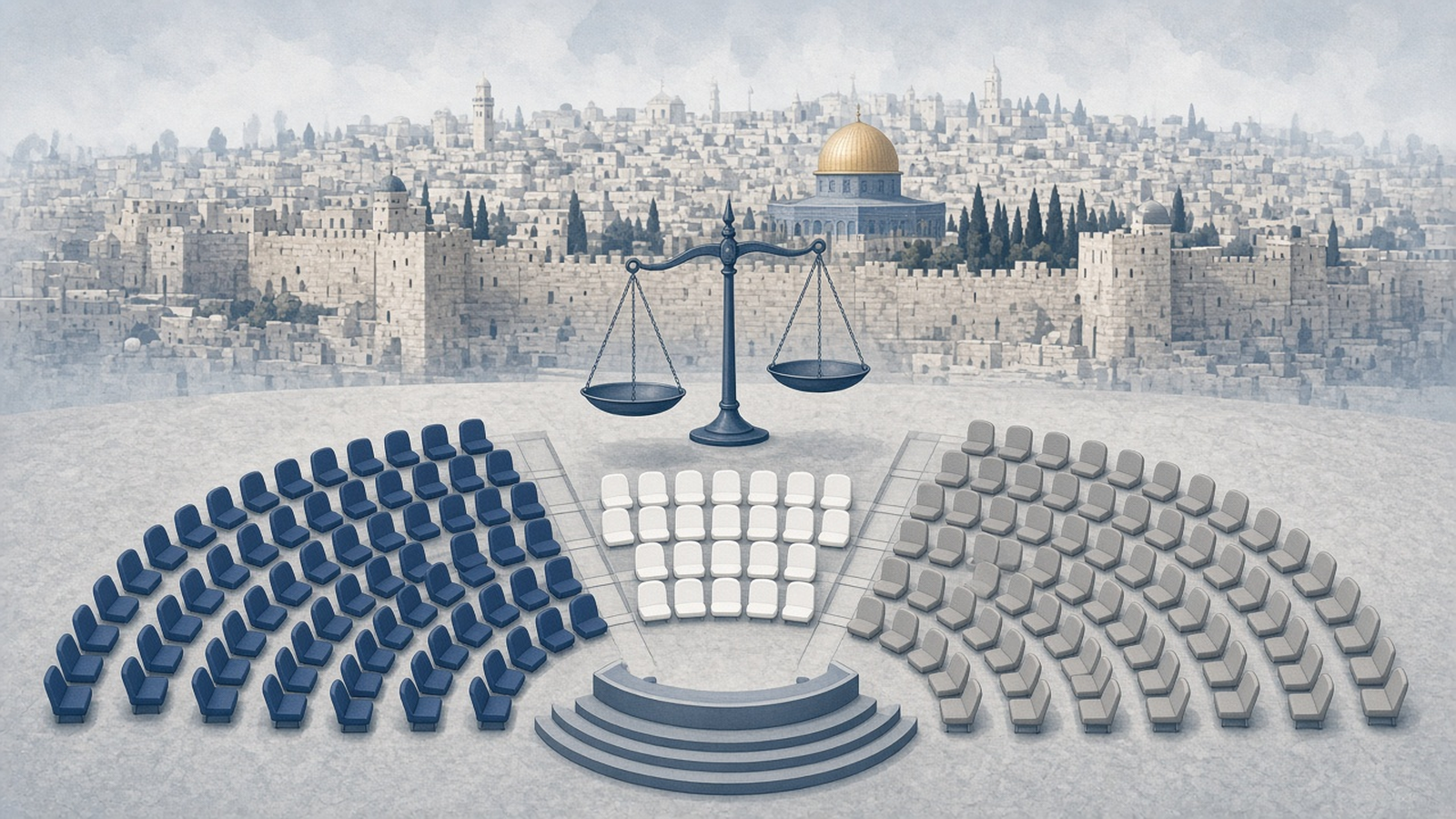
Israel’s Hung Verdict: No Majority, Many Questions
We Indians love election results. We sit with TV channels, count seats and argue with friends. So when I saw that Israel’s election has ended with no clear winner, I wanted to understand it properly and share it with you in simple words.
The numbers so far
Israel voted on Tuesday, October 27. The Knesset, their parliament, has 120 seats. To form a government, you need at least 61.
With most votes counted, the Central Elections Committee’s figures, as reported by The Times of Israel and Al Jazeera, are:
- Prime Minister Benjamin Netanyahu’s bloc: 53 seats
- Opposition bloc led by Gadi Eisenkot (Yashar party): 48 seats
- Arab parties (Joint List and Ra’am): 19 seats, a historic high. The previous record was 15 in 2020.
Around 500,000 to 600,000 “double envelope” ballots, from soldiers, diplomats and others, were still to be counted. So the numbers may shift a little. Final results were expected around Thursday.
Why no one can form a government easily
Netanyahu’s bloc is short of 61. The anti-Netanyahu side has more seats overall, but only if you count the Arab parties. Eisenkot and most of his allies have largely ruled out a government with the Arab parties. Without them, they are far below 61.
So the Arab parties have suddenly become very important. The opposition must either make some kind of arrangement with them, or look for other options like a unity government or new elections.
What happens next
President Isaac Herzog will decide which leader gets the first chance to form a government. The new Knesset must be sworn in within 14 days of the election. Until a new government forms, the current government continues as a caretaker government with limited powers.
If no one manages a majority, Israel may face yet another election. They have had many in recent years.
Yair Golan, leader of the centre-left Democrats and a partner in Eisenkot’s bloc, said he would meet other leaders for coalition talks, as reported by The Guardian. So the bargaining has already started, and the coming days will be busy.
What we in India can learn
India has seen hung assemblies and hung Parliaments too. We have seen coalition governments run well, and we have seen some fall quickly. One lesson I believe in: when voters give a split verdict, they are asking leaders to talk to each other, not just fight.
Israel’s situation is very tense, with war, security and deep divisions in society. The BBC described this result as a sign of the country’s deep divisions. I hope whoever forms the government works for peace and for the safety of ordinary people on all sides.
What do you think? Should rival parties join hands in a unity government when voters give a hung verdict, or is a fresh election better? Share your thoughts below.
